2026 Best Online Nursing Degrees
Find out which bachelor's programs students rate the best online nursing degrees.
Why Trust Us?
- 90,000+ Verified Student Reviews
- Manually Researched Tuition
- 200+ Expert Interviews
- 1,800+ Online Colleges
- 30,000+ Online Degrees
Nursing remains one of the most in-demand — and rewarding — careers, and more students than ever are choosing to earn their nursing degree online.
Key Takeaways:
- Jacksonville University earns the top spot and a perfect score. With a 4.32/5 review rating and a 100% recommendation rate.
- With nearly 53,000 online students and 455 verified student reviews, ASU's rating of 3.83/5 and 86% recommendation rate carry more statistical weight than almost anyone else on this list.
This list of the best online nursing degrees are ranked by student reviews. The OnlineU research team manually verified every program on this list, cross-checking accreditation, tuition, student reviews, and real post-graduation earnings so you can compare your options with confidence.

How We Rank "Best" Schools

The OnlineU research team verifies that only institutionally accredited schools offering at least one fully online bachelor's in nursing degree make the cut. On top of that, each program must have at least 5 verified student reviews with an aggregate rating of 3+ on a 5-point scale, so you know real students have weighed in and vouched for the experience.
We also manually research all tuition rates and include the median earnings of nursing majors 5 years after graduation, giving you a complete, honest picture of what you're signing up for.


2026 Best Online Nursing Degrees
| Rank | School | Review Rating | Recommendation | Annual Tuition | Median Salary |
|---|---|---|---|---|---|
| Jacksonville University | 4.32 / 5 | 100% | $46,180 | $92,956 | |
| Aspen University | 4.08 / 5 | 80% | $8,250 | N/A | |
| University of Florida | 3.87 / 5 | 83% | $3,357 | $77,478 | |
| Arizona State University, Online | 3.83 / 5 | 86% | $17,400 | $91,152 | |
| Capella University | 3.62 / 5 | 70% | $10,680 | $96,740 | |
| Beckfield College | 3.57 / 5 | 71% | $15,975 | N/A | |
| Western Governors University | 3.48 / 5 | 61% | $8,300 | $97,743 | |
| Purdue Global | 3.46 / 5 | 68% | $11,130 | $97,094 | |
| American Sentinel College of Nursing & Health Sciences at Post University | 3.45 / 5 | 67% | N/A | N/A |
Online degree: RN to BSN (licensed RNs only)
AI Summary of Our Student Reviews: There is repeated praise for responsive professors, accessible virtual office hours, and instructors who communicate promptly and clearly. There is also strong appreciation for advisors, who are described as highly involved in enrollment, financial aid, and course planning, helping you navigate the program with less friction. Reviewers highlight manageable but rigorous 8-week courses, reasonable deadlines, and flexible online lectures that fit around work and life demands. Several comments point to user-friendly technology, including Blackboard, discussion boards, and study group options, which appear to make participation straightforward rather than burdensome. One reviewer directly links the BSN to a management promotion and higher pay, while another says the experience motivated continued study toward an MSN.
Common Phrases Across Student Reviews:
- Responsive and caring faculty
- Flexible online nursing format
- Helpful academic advising support
- Manageable but rigorous courses
- Career-focused nursing preparation
- Easy-to-use learning platform
Student Reviews
I would recommend attending Jacksonville University especially for their nursing program. They have excellent nursing professors who are very knowledgeable and hands on, smaller class sizes, access to clinical rotations at major facilities in the area,... Read More
The degree that I recently obtained from Jacksonville University has made a positive impact on my nursing career. Post completion of my BSN degree I was offered a management position with a significant increase in pay. The skills that I learned from Jacksonville... Read More
I attended the online Bachelor's program at Jacksonville University. When I inquired about the program I was assigned an advisor who walked me step by step though the admission and financial aid processes. He was fabulous. He had an in-depth understanding... Read More
- Undergraduate Online: 128 enrolled
- In-State Tuition: N/A
- Out-of-State Tuition: $46,180
- Program Length: 4 years
- Median Earnings: $92,956
- Avg. Graduation Rate: 57%
- Retention Rate: 75%
- Institution Type: Non-Profit

Online degree: RN to BSN
AI Summary of Our Student Reviews: There is repeated praise for affordability, monthly payment plans, and the ability to continue working full time while progressing through an online format. Many reviewers valued responsive professors, supportive advisors, and curriculum that strengthened APA writing, research, leadership, informatics, and broader professional nursing perspective. Several reviews tie the degree directly to promotions, expanded job options, and readiness for graduate study. Positive reviewers often describe the program as rigorous but worthwhile, emphasizing that you must be self-directed, organized, and comfortable with heavy reading, discussion posts, papers, and presentations. Negative reviews focus on what they see as excessive busy work, rigid weekly deadlines, inability to work ahead in some courses, uneven grading standards, poor website navigation, and inconsistent advisor or instructor support.
Common Phrases Across Student Reviews:
- Affordable monthly payment plan
- Writing-intensive online coursework
- Flexible for working nurses
- Responsive professors and advisors
- Heavy weekly busy work
- Rigorous but career-building
- Inconsistent instructor expectations
- Self-directed learning required
Student Reviews
Completed my Bachelor of Science in Nursing online through Aspen University. Tuition was affordable and could be done in installments. I also got a discount from work. Classes were 8 weeks long with manageable workload and good instructors. Each class... Read More
I really loved the RN to BSN program at Aspen. It was convenient and easy to follow and I could work at my own pace. I especially liked that I could pay for my classes with a monthly payment plan and also that new classes started every 2 weeks so if I... Read More
I started this program about 2 months before the Covid 19 pandemic, and I just completed it. I took off quite a bit of time in-between. Everyone was so accommodating. This was such a great program, it got me back to writing papers, something I hadn't... Read More
- Undergraduate Online: 2,119 enrolled
- In-State Tuition: $8,250
- Out-of-State Tuition: $8,250
- Program Length: 4 years
- Median Earnings: N/A
- Avg. Graduation Rate: N/A
- Retention Rate: N/A
- Institution Type: For-Profit

Online degree: RN to BSN
AI Summary of Our Student Reviews: Across the reviews, there is see consistent praise for the campus environment, state-of-the-art labs and classrooms, and the scale of opportunities available at a large university. There is also strong appreciation for the program’s clinical preparation, particularly its connection to Shands Hospital, which reviewers describe as a major advantage for hands-on exposure across varied health care settings and case types. Several reviewers indicate that the program builds real professional confidence, with one noting that the training directly supported RN practice and progression into graduate study. The main criticism is significant and specific: one reviewer describes excessive workload, unsupportive faculty, poor teaching methods, and extremely difficult exams that feel designed to prevent success.
Common Phrases Across Student Reviews:
- Strong clinical preparation pathway
- State-of-the-art learning facilities
- Large campus, many opportunities
- Demanding workload and exams
- Shands Hospital clinical access
- Professors vary in support
Student Reviews
The BSN program at the University of Florida is top notch. The school is associated with Shands Hospital which is a large tertiary health center for the state of Florida. Every area of health is represented in your academics and hands-on training. You... Read More
The University of Florida College of Nursing went above and beyond in order to prepare me and my fellow classmates for the demanding, yet rewarding field of nursing. As a practicing Registered Nurse, I feel confident in the care that I provide to my patients.... Read More
Go to office hours. Go to sporting events. Make new friends in class and have study groups. Being naturally smart helps but college was where I finally struggled a little and really had to learn how to study. Have fun! You will make mistakes but don't... Read More
- Undergraduate Online: 1,341 enrolled
- In-State Tuition: $3,357
- Out-of-State Tuition: $3,357
- Program Length: 4 years
- Median Earnings: $77,478
- Avg. Graduation Rate: 92%
- Retention Rate: 97%
- Institution Type: Non-Profit
Online degree: Nursing - RN to BSN
AI Summary of Our Student Reviews: Several reviewers value the program’s flexibility, especially for working nurses, and note that the curriculum broadened their understanding of nursing roles and long-term career options. There is distinct appreciation for ASU’s innovation-focused approach, small class settings, and, in some accounts, high-quality clinical preparation that translated well into workplace readiness after graduation. One reviewer specifically credits the program with producing stronger real-world readiness than peer institutions. The main criticisms center on inconsistency during curriculum changes, uneven instructional quality, and concerns that some courses or grading systems prioritized participation over rigor. One strongly negative review describes limited clinical variety, inflexible scheduling, and administration perceived as unsupportive.
Common Phrases Across Student Reviews:
- strong academic support system
- flexible online nursing pathway
- innovation-focused nursing curriculum
- inconsistent course execution
- career-ready clinical preparation
- responsive advising and staff
- limited clinical site variety
Student Reviews
Many places, hospitals notwithstanding, are requiring more and more education to get hired. I knew acquiring my Bachelor of Science in Nursing would provide more room for growth and opportunities. I have always wanted to continue my nursing education... Read More
I had an excellent experience completing my undergraduate degree at ASU. Being a part of the nursing school, we were offered small class sizes that allowed for better learning opportunities and a chance to develop lifelong relationships with our instructors... Read More
Arizona State University (ASU) is where I completed my second bachelor's degree, in nursing. My first degree was in biology. Compared to The Ohio State University (OSU), where I completed my first degree, my experience at ASU was easily ten-fold better,... Read More
- Undergraduate Online: 52,896 enrolled
- In-State Tuition: $17,400
- Out-of-State Tuition: $17,400
- Program Length: 4 years
- Median Earnings: $91,152
- Avg. Graduation Rate: 68%
- Retention Rate: 85%
- Institution Type: Non-Profit

Online degree: BSN - RN-to-BSN Completion (CCNE-accredited)
AI Summary of Our Student Reviews: Many reviewers praise the program’s flexibility, accelerated pacing, and transfer-credit friendliness, with several saying you can finish quickly while working full time, managing family responsibilities, or leveraging prior coursework. Many also value supportive enrollment counselors, coaches, tutors, and some professors, as well as the accredited status and ANA-related credibility or discounts. Several reviewers say the curriculum is paper-heavy, repetitive, and built around self-directed competency assessments rather than traditional teaching. You may find the program effective if you already write well, manage deadlines independently, and prefer applied research over lectures. Negative reviews focus heavily on confusing billing, unexpected charges, vague assignment expectations, limited compassion during personal hardships, and a perception that some coursework feels like redundant busy work rather than meaningful nursing advancement.
Common Phrases Across Student Reviews:
- Flexible self-paced learning
- Paper-heavy competency model
- Supportive advising and coaching
- Fast RN-to-BSN completion
- Confusing billing structure
- Redundant written assignments
- Good for working nurses
- Limited traditional instruction
Student Reviews
Most of these negative reviews are from people that didn't understand the billing structure and/or have no concept of "competency based" programs. ASK QUESTIONS BEFORE YOU ENROLL. My enrollment counselor, Randy answered everything for me. I knew what... Read More
I just completed the RN to BSN program with the flexpath, 100% online, completed in one term (12 weeks). I started in May 2023 and completed mid-July 2023. It was challenging, the professors were great, for the most part. It was a lot of work, and I learned... Read More
I can’t say enough about the flex path. I 100% thought it was too good to be true but I started my BSN 3/6 and finished 5/19/23. I had a referral scholarship that got tuition down to a little under 2700 for the 12 week cycle and I straight up busted my... Read More
- Undergraduate Online: 16,177 enrolled
- In-State Tuition: $10,680
- Out-of-State Tuition: $10,680
- Program Length: 4 years
- Median Earnings: $96,740
- Avg. Graduation Rate: 33%
- Retention Rate: 23%
- Institution Type: For-Profit
Nursing Degrees by State
- Alabama
- Arizona
- Arkansas
- California
- Colorado
- Connecticut
- Florida
- Georgia
- Hawaii
- Idaho
- Illinois
- Indiana
- Iowa
- Kansas
- Kentucky
- Louisiana
- Maine
- Maryland
- Massachusetts
- Michigan
- Minnesota
- Mississippi
- Missouri
- Montana
- Nebraska
- Nevada
- New Hampshire
- New Jersey
- New Mexico
- New York
- North Carolina
- North Dakota
- Ohio
- Oklahoma
- Oregon
- Pennsylvania
- South Carolina
- South Dakota
- Tennessee
- Texas
- Utah
- Virginia
- Washington
- Washington D.C.
- West Virginia
- Wisconsin
- Wyoming
Kiara DeWitt, Pediatric Neurology RN, on Online Nursing Education and Career Growth
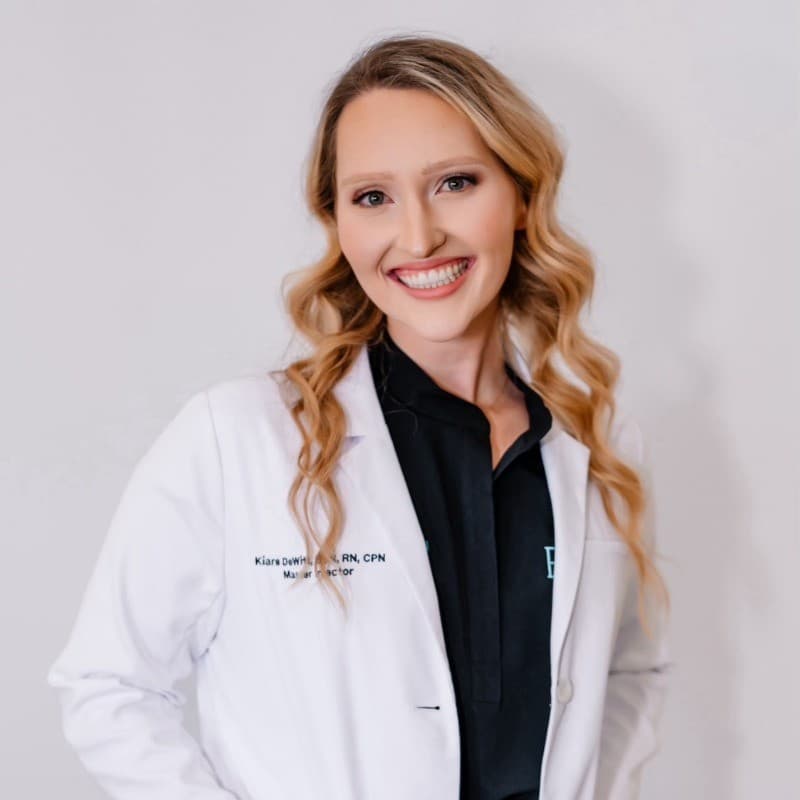
Pediatric Neurology Nurse & Nursing Educator at Cook Children’s Medical Center
The Growing Credibility of Online Nursing Degrees
For working nurses seeking to advance their careers, online education is increasingly viewed as both practical and respected. As Kiara DeWitt explains, “Online degrees are finally getting treated with some respect, at least in healthcare… Most employers are asking where you trained and what you know, not whether you sat in a chair for four semesters.”
DeWitt adds that the strength of an online nursing program lies in “the network, the instructors and the reputation behind the certification,” reminding students that “people will still ask who taught you.”
Building Credibility Through Applied Experience
DeWitt cautions that real-world experience remains essential in an online degree: “Programs still need clinical or field placements. No matter how online the course is, if it has no real-world component, you are stuck.” She emphasizes that credentials matter most when paired with applied practice: “The paper alone opens the door, but the application of that education keeps it open.”
No matter how online the course is, if it has no real-world component, you are stuck.
She also encourages nursing students to continue growing their expertise after graduation. “The smartest thing a student can do is add one more thing to their training,” she advises. She suggests the following:
-
“Pick up a certification.
-
Become bilingual.
-
Learn applied behavioral analysis.
-
Volunteer 10 hours a week at a pediatric therapy clinic.
That extra 10% makes you unforgettable in a stack of resumes.”
Choosing the Right Online Nursing Program
When it comes to selecting a degree path, DeWitt advises you to think strategically about your career goals. “Figure out where you want to work and ask them what they value,” she says. She adds that clarity about future roles can help guide you toward the right academic fit: “So, figure out who signs the checks and reverse engineer your degree from there.”
This mindset, focused on aligning education with real-world outcomes, reinforces DeWitt’s larger message, which is that online learning is most effective when paired with intentional career planning and a commitment to lifelong professional growth.
FAQs About the Best Online Nursing Programs
What Can You Expect From an Online Nursing Degree?
Nurses are the backbone of the healthcare industry. Online nursing degrees offer a flexible way for RNs to advance their careers and increase job opportunities. These programs vary in cost, schedule, and format, with some requiring in-person residencies and others offering accelerated options for faster completion.
Nursing is one of the most popular majors, and hundreds of schools now offer nursing degree programs virtually. Students typically learn to assess health conditions, develop comprehensive care plans, educate patients and the public about health, monitor admissions and discharges, and supervise staff.
Some programs have concentrations so students can tailor their studies to a focused area of practice, such as family medicine, pediatrics, geriatrics, hospice, or public health.
Online nursing programs require students to complete much of their coursework remotely and then engage in on-site clinical practice activities at approved healthcare facilities near their homes.
Which Nursing Level Is Best for Me?
The best type of nursing degree depends on which type of nurse a student wants to become. Those who are eager to enter the workforce may want to consider becoming a licensed practical nurse (LPN) or licensed vocational nurse (LVN). Students can enter these careers with only a nursing certificate or diploma, which typically takes one year to achieve.
For those who want to become registered nurses — taking on more responsibility and earning higher salaries than LPNS and LVNs — a two-year associate degree in nursing may be a better choice. Generally speaking, a nurse's earnings increase with their level of education, so a four-year Bachelor of Science in Nursing may be the best option for some. The most common online nursing programs are RN-to-BSN programs for RNs who have earned either a certificate or an associate degree and now want to complete a bachelor's degree in nursing. However, there are also online BSN programs for students who are not yet RNs and have no previous nursing education.
What Online Courses Are Included in a Bachelor's in Nursing?
BSN programs prepare students for professional nursing practice. Coursework helps students develop skills such as critical thinking, problem-solving, research, education, and leadership.
Some classes will involve hands-on, experiential learning activities, and most nursing programs online require a practicum in which students work in a supervised healthcare setting to gain a required number of clinical hours.
Some of the most common nursing courses include those below.
- Community Health: In this course, students learn how to care for individuals, families, groups, and high-risk populations in community health settings. They learn to care for patients of all ages by recognizing physical, psychological, social, and cultural needs in order to provide interventions as needed. The course often requires hands-on application of concepts as students work in various community health environments.
- Evidence-based Practice: This course provides nursing students with a systematic process for using current evidence and data to make decisions about patient care. Students learn how to research health literature, identify relevant qualitative and quantitative data, and analyze this information to make informed decisions.
- Health Assessment, Education, and Promotion: Students transition to a higher level of nursing practice in this course, where they learn to conduct a comprehensive physical examination, including collecting, organizing, interpreting, and recording patient data. They also explore the role of nurses as educators by learning to use health education and promotion strategies and to overcome patients' barriers to change.
- Health Informatics: Health informatics faculty introduce students to the latest information technology used in nursing practice. Students will use these tools to communicate data and other knowledge to inform patients and work with them to manage their care.
What Types of Online Bachelor's Degrees in Nursing Are Available?
There are two main types of online bachelor's programs in nursing: direct-entry BSN, RN to BSN, and second-degree BSN. Each degree combines information-based classes with on-site clinical experience. Many online nursing programs also come with an accelerated option.
The table below highlights typical prerequisites, the average time to completion, and additional links for each degree.
Direct-entry BSN | High school diploma | Four years
RN to BSN | RN license | One to two years
Second-Degree BSN | Non-nursing bachelor's degree | Two to three years
Bridge Programs
Online nursing bridge programs may help nurses with existing credentials gain a higher degree in less time. For bachelor's students, the relevant program is the RN-to-BSN path. These programs usually require one year of work as an RN, but some programs allow students to submit an essay on nursing topics instead.
Bridge programs also generally require that nurses transfer 60 credits of general education and nursing courses. Applicants must have completed foundational courses in physical sciences, math, social sciences, and humanities.
Accelerated Nursing Programs
Accelerated and second-degree programs might help students to graduate college early by giving credit for previous experience or letting them take more classes in less time. Second-degree programs in nursing are designed for students who already have a bachelor's degree in a non-nursing area.
Accelerated programs are intensive and generally have high admissions standards.
Most second-degree programs in nursing advise incoming students not to hold a job while completing the program, as the coursework and clinical practicums are very demanding.
What Should You Consider When Choosing an Online Nursing Program?
Career goals, specialization, and relevant experience will dictate which online nursing programs may suit you best. You'll need to decide how far you want to go with your career and what your plans are for the future. Once determined, you can start looking at specific schools and programs and what they have to offer that will help you meet your goals.
Below are some other factors to consider when choosing an online nursing program.
Accreditation: Accreditation ensures program curriculum, faculty, and learning outcomes meet state and national standards and is necessary for licensure. The Commission on Collegiate Nursing Education (CCNE) programmatically accredits many traditional bachelor's and master's programs, and the Accreditation Commission for Education in Nursing (ACEN) accredits those online. Either is accepted for licensure. The US Department of Education can help identify accredited nursing programs.
Cost: It's important to choose an affordable program that meets educational and career goals while mitigating any student debt that you may incur. Earning transfer credits at a community college can help save money. Along with federal financial aid, students often choose to apply for private scholarships to help offset costs. You might also consider the costs associated with obtaining and maintaining a nursing license.
Degree Level: Students should pick the level appropriate to their background and career goals. It may help to look at several careers to note the degree requirements and research employers of interest to find out what they specifically want in a healthcare worker.
Exam Pass Rates: The NCLEX was developed by the National Council of State Boards of Nursing (NCSBN) as a way for nursing graduates to prove competency and earn state licenses. Most schools post NCLEX pass rates on their websites, allowing students to gauge the quality of their nursing programs by how many students pass on the first try.
Support for Online Learners: It can be challenging to complete a nursing program online without staff and faculty nearby. Therefore, it's essential to consider what kind of support for online students is available. For example, schools may offer writing and tutorial services online, library services and access to librarians, tech support, and opportunities to engage with other students through online clubs and associations. It's also important to ask about the best way to contact faculty and how quickly they typically respond.
What Can You Do With a Bachelor's in Nursing?
Graduates can become registered nurses with a nursing certificate, associate degree, or bachelor's degree. This career pays median wages of $93,600 per year and features a 5% growth rate in new jobs through 2034.
Online BSN programs typically prepare students to pass their nursing certifications, including the NCLEX exam, and to obtain a license to practice nursing. Each nursing degree option also opens the door to different specializations. Prospective nurses who want to pursue a particular area of focus should pick a program that allows them to reach their desired level of specialization. We've listed a few specializations below.
Cardiac Care Nurse: These heart specialists provide care to patients during hospital or outpatient stays, including monitoring ongoing cardiac conditions. A large part of their work involves educating patients on the best ways to take care of themselves. RNs typically need one of several specialty certifications to find work as cardiac care nurses.
Geriatric Nurse: Geriatric nurses specialize in working with older adults. They perform assessments, administer medications, and prepare and update nursing plans for their patients, among other tasks. RNs can become geriatric nurses with only an associate degree, but some states require a BSN and possibly additional certification.
Pediatric Nurse: Pediatric nurses are RNs who work with children. They provide routine check-ups, administer medications and immunizations, and conduct screenings for developmental conditions. Many states require pediatric nurses to have a BSN, and some require them to obtain special certification in addition to their nursing licenses.
How Do I Get a Nursing License?
To legally practice as a nurse, all nursing candidates in the U.S. must first graduate from an accredited nursing program. They must then apply for an RN nursing license from their state nursing board, which requires passing the NCLEX, administered by the National Council of State Boards of Nursing.
There are two types of examinations — the NCLEX-RN, which is for registered nurses, and the NCLEX-PN, which is for practical nurses. The tests are designed to ensure that nursing professionals have the appropriate healthcare and professional knowledge before they begin working with patients and handling sensitive healthcare information. Nursing students can find more details about the contents of the exams on the NCSBN website.
In addition to passing the appropriate NCLEX exam, nursing candidates must meet their state's board of nursing requirements to obtain licensure. Some states also require licensed nurses to complete continuing education hours during each license renewal period to demonstrate their knowledge and update their skills. Students can check with their state board to learn more about their specific licensing requirements.
What Are the Requirements for Renewing a Nursing License?
Requirements for renewing a nursing license vary by state, but in most cases, nursing licenses need to be renewed once every two years. Some states set a specific deadline for renewal, such as the nurse's birthday.
Almost every state requires nurses to complete a documented number of continuing education hours, called CEUs or "contact hours," in order to maintain their licenses. The number of contact hours required may vary depending on whether the nurse works full or part time. If a license lapses, delinquency fees may occur. However, fees can be avoided if nurses request to have their licenses put on inactive status during their time away from work.
Approximately two-thirds of the states in the U.S. have entered into the Nurse Licensure Compact. This interstate agreement allows nurses who qualify for the multistate license to practice on-site nursing, telenursing, and nursing education in any of the states in the NLC without obtaining separate licenses for each state.
Is an Online Bachelor's in Nursing Degree Worth It?
A bachelor's degree in nursing can open up many career opportunities. However, there are some specific advantages and disadvantages students may want to explore when deciding whether to pursue a BSN, particularly through distance learning.
Potential Benefits
- This degree has the potential to pay off in terms of salary. According to the Bureau of Labor Statistics (BLS), the median annual salary is $93,600 for RNs with bachelor's degrees, as compared to licensed nurses with associate degrees who earn a median annual salary of $62,340.
- The BLS predicts that about 189,100 new jobs for registered nurses will emerge over the next decade through 2034, and a bachelor's degree could help make graduates more competitive in the job market.
- Earning a BSN online allows students to choose from a broader range of schools without moving to a new location. It also means that they can complete coursework on their own schedules and fulfill requirements for clinical hours at healthcare facilities close to home.
Potential Drawbacks
- A BSN requires two additional years of education beyond an associate nursing degree, which means a higher cost for the degree and more time out of the workforce are required.
- As with other distance-learning programs, some online nursing students may feel somewhat disconnected from their peers, and they may not always reap the rewards of sharing information and experiences with classmates, which often occurs within the classroom environment.
- Some nursing jobs require long shifts during nontraditional hours, especially when working in a hospital or emergency care environment. Aspiring nurses who want a more traditional work schedule may prefer a career in a physician's office.
How Long Will It Take to Earn My Nursing Degree?
It depends on how much nursing education you already have. If you have an associate degree in nursing (ADN), you might finish an RN-to-BSN program in 1-2 years. Administrators design traditional BSN programs to take four years with a full-time schedule, but most college students take more than four years to finish.
Are Online Nursing Degrees Legitimate?
Accredited online colleges are legitimate — not to mention increasingly respected — so make sure to only consider schools with institutional accreditation. These institutions work to ensure that their online programs feature the same level of quality as on-campus offerings.